
Water Intake and Weight Loss: Fact vs Overhyped Advice
Water does not burn fat, and drinking four litres will not speed anything up. What it does do is worth knowing — particularly the effect it has on the number you see on the scale.
Fit with Faisal Noor
Certified Fitness Coach & Nutrition Specialist
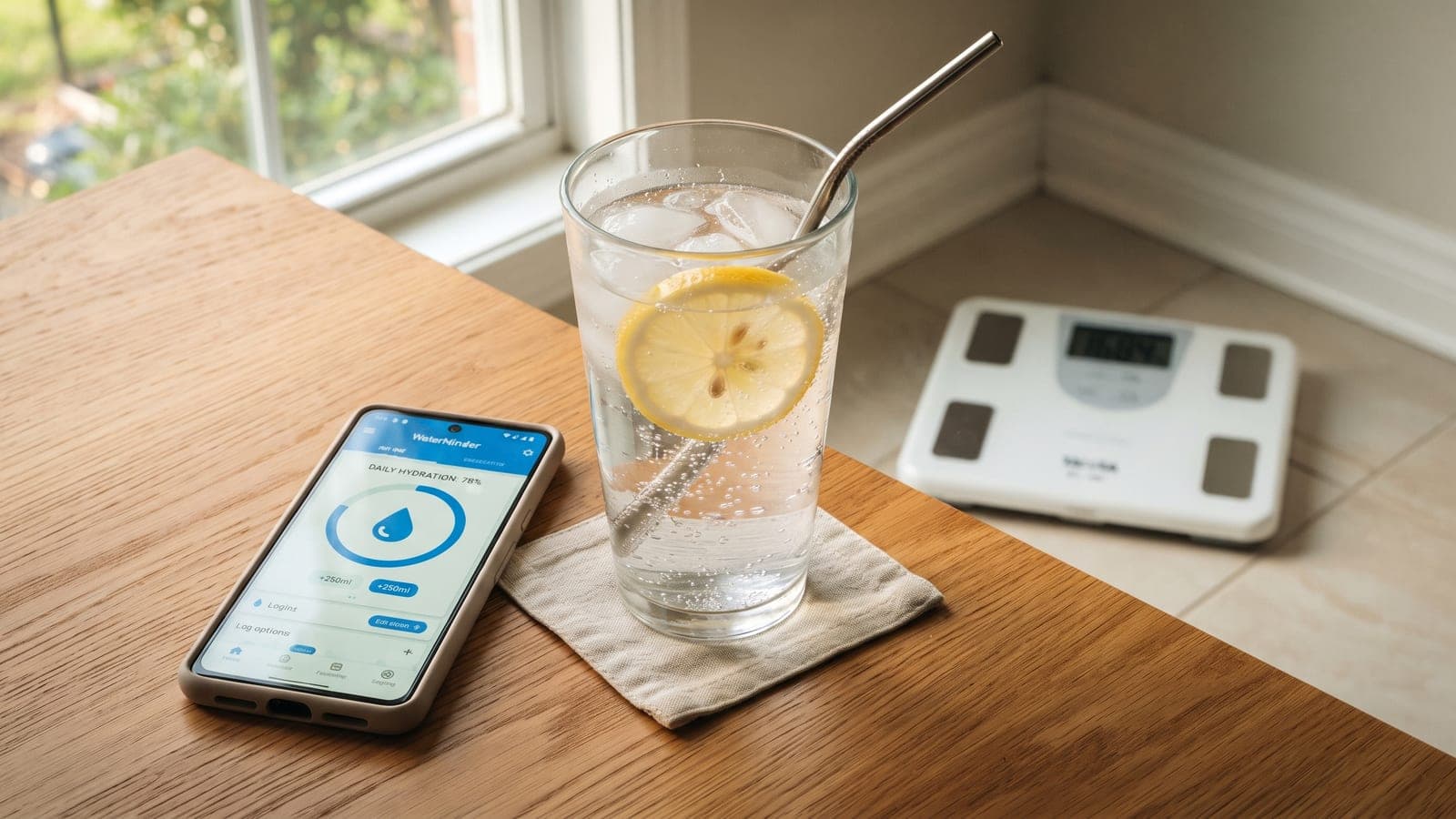
You have been told to drink more water to lose weight, probably without any explanation of the mechanism.
Water matters. It matters for real, modest, well-understood reasons — and not for the ones it is usually sold on. Knowing the difference stops you from expecting something it cannot deliver.
Why This Happens
Water is free, harmless, and easy to recommend, which makes it the most repeated advice in fitness. Repetition has inflated the claims.
The honest position: water does not burn fat. There is no metabolic pathway by which drinking more water causes fat tissue to be broken down. Any advice implying otherwise is wrong.
What water genuinely does:
- Fills the stomach, which modestly reduces intake at the next meal
- Replaces liquid calories if it displaces soft drinks or sweetened chai
- Supports training quality — even mild dehydration measurably reduces strength output
- Prevents thirst being misread as hunger, which is real but smaller than usually claimed
Those are worthwhile. None of them is dramatic, and stacked together they are a helpful supporting habit rather than a lever.
What Most People Get Wrong
Believing the calorie-burning claim. Drinking cold water does cost energy to warm — roughly 8 calories per glass. Across two litres that is under 40 calories a day. Real, and irrelevant.
Fixating on a fixed number of litres. The "eight glasses" figure has no strong evidential basis. Requirements vary with bodyweight, climate, activity, and diet — and a great deal of your intake comes from food.
Not understanding water weight, which is the big one. Water shifts cause 1–2 kg of daily scale variation, entirely independent of fat. High salt, a heavy carbohydrate meal, a hard training session, poor sleep, or the menstrual cycle all cause retention. People read these as fat gain and abandon working plans over them.
Drinking too much. Rare but real. Very high intake without electrolytes can dilute blood sodium, which is dangerous. More is not indefinitely better.
Water will not burn your fat. It will substantially change what the scale says from one morning to the next — which is why so many people quit a plan that was working.
The Fix
How much you actually need
A reasonable target: 30–35 ml per kilogram of bodyweight per day, from all sources including food, tea, and coffee.
| Bodyweight | Daily target |
|---|---|
| 60 kg | 1.8–2.1 litres |
| 75 kg | 2.2–2.6 litres |
| 90 kg | 2.7–3.1 litres |
Add roughly 500 ml per hour of hard training, and more in summer heat.
The simplest check requires no measuring at all: pale straw-coloured urine means you are adequately hydrated. Dark means drink more. Completely clear all day means you can ease off.
Tea and coffee count. The claim that they dehydrate you is outdated — the caffeine has a mild diuretic effect that does not offset the fluid itself.
Where it genuinely helps a diet
A glass before meals. Modest, but it reliably reduces intake slightly at the meal that follows.
Replacing liquid calories. This is the largest real effect by a wide margin. A daily soft drink or two sweetened chais is 200–400 calories that contribute nothing to fullness. Removing them is often a quarter of an entire deficit — and that is a water-related win, even though the water is not what caused it.
Before and during training. Dehydration of 2% of bodyweight measurably reduces strength. If you train in Karachi or Lahore in summer, this is not a marginal concern.
How to read the scale properly
Because water moves 1–2 kg day to day, a single reading is noise.
Weigh daily under the same conditions — morning, after the toilet, before eating — and compare weekly averages, not individual days. If this week's average is below last week's, the plan is working, regardless of what Wednesday said.
Expect a jump after a salty meal, after a hard session, or after a high-carbohydrate day. None of it is fat. This is one of the most common reasons people believe they have plateaued when they have not.
Hydration in this climate
Standard advice underestimates requirements here for several months of the year.
In summer heat, particularly for anyone working outdoors or training in a non-air-conditioned gym, sweat losses climb sharply. The 30–35 ml per kg guide is a baseline; on a hot day training hard, an additional litre is reasonable.
Two practical points. Plain water is enough for sessions under about an hour — sports drinks are unnecessary and mostly sugar. Beyond that, or when sweating heavily, a pinch of salt in water or a simple homemade lemon-salt-sugar drink replaces electrolytes for a fraction of the cost of anything bottled.
During Ramadan the arithmetic changes entirely: the fluid you would normally spread across the day has to fit between iftar and sehri, which takes deliberate planning rather than drinking heavily at one sitting.
Tracking It Without Thinking About It
Water is one of those habits that works when it is automatic and fails when it depends on remembering.
FitLife tracks daily water alongside weight, steps, and sleep, with reminders through the day — which turns it from something you intend to do into something you have done. Seeing water logged next to your weight trend also makes the day-to-day scale noise obvious rather than alarming.
Today, do the honest version: replace one sweetened drink with water. That single swap does more for your deficit than any amount of additional water on top of your current diet.
Keep Reading
Supplements: What's Worth Your Money and What Isn't
Three supplements have solid evidence behind them. Most of the rest are selling you an expensive version of something food already provides. Here is the honest breakdown.
Sustainable Weight Loss: What "1kg a Week" Actually Costs Your Body
Losing a kilo a week is possible. What the promise leaves out is how much of it is muscle, what it does to your training, and why the weight usually comes back. Here is the honest arithmetic.
How to Read a Nutrition Label Like a Coach (Not Like an Ad)
The front of the packet is marketing. The back is data. Here is how to read the panel in ten seconds, and the four tricks that make unhealthy products look healthy.