
How I Build a Custom Diet Plan for a New Client (Step by Step)
What actually happens between someone signing up and receiving their plan — the questions I ask, the calculations behind the numbers, and why the first version is deliberately not the final one.
Fit with Faisal Noor
Certified Fitness Coach & Nutrition Specialist
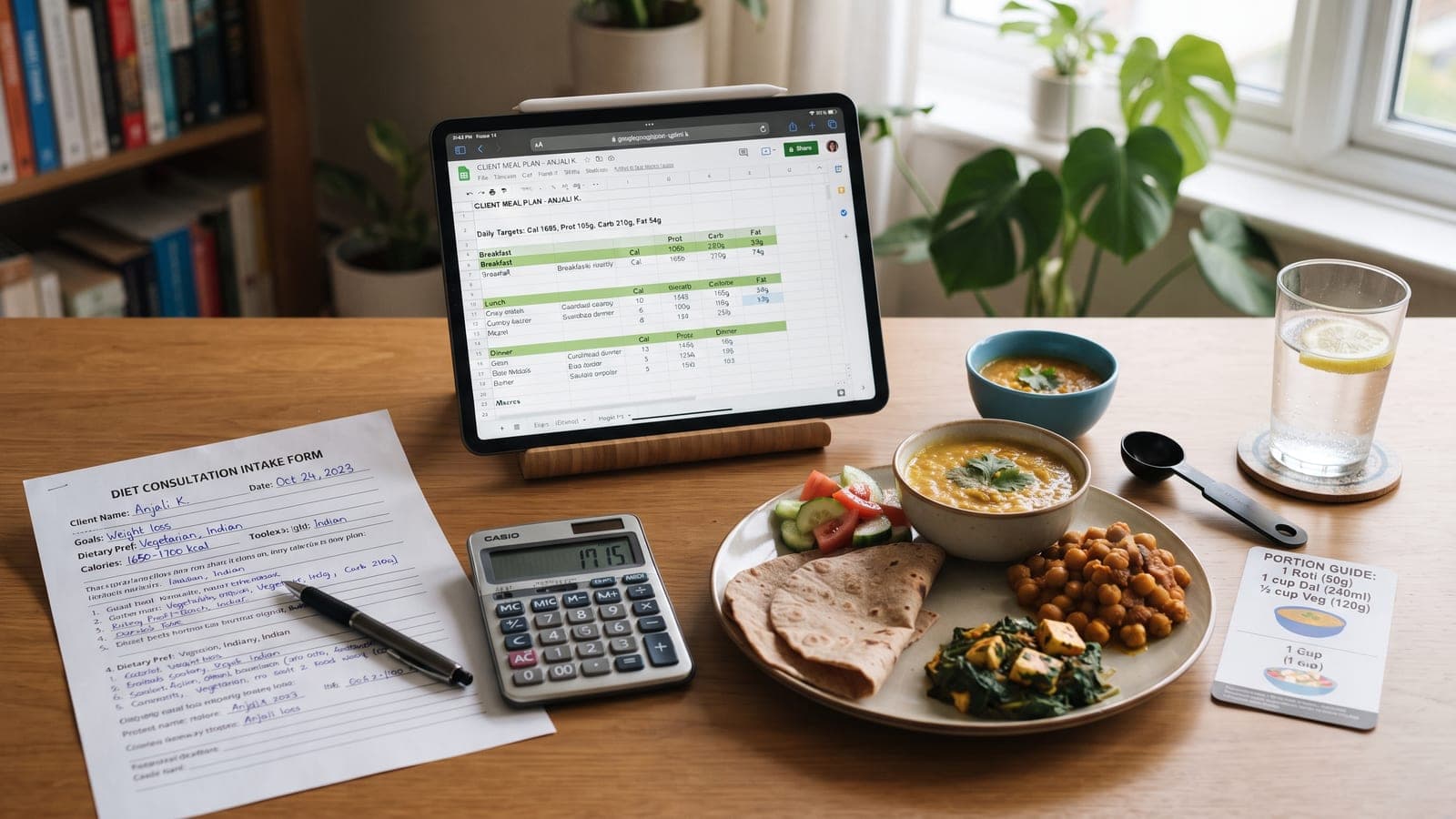
Most people have only seen the output of this process: a document with meals and numbers on it. That makes it hard to judge whether one plan is worth more than another, because the part that determines quality happens before the document exists.
So here is the whole process, in the order it happens.
Why This Happens
The reason generic plans fail is not that the nutrition science in them is wrong. Calories and protein work the same for everybody.
They fail because a plan is a fit problem, not a knowledge problem. The correct daily target is meaningless if it is delivered as six meals to someone who eats twice a day, or built around foods they do not buy, or ignores that they work nights.
Every step below exists to establish constraints before any numbers are set. Get the constraints wrong and the arithmetic is irrelevant — the plan will be abandoned in week three regardless of how correct it was.
What Most People Get Wrong
Expecting a plan to be a fixed document. A plan is a starting position that gets corrected against your results. Anyone who hands over a PDF and considers the job finished has sold you a template with your name on it.
Thinking more restriction means a better plan. A plan removing rice, roti, sugar, and oil looks rigorous. It is usually just a plan with a short lifespan. The best plan is the least restrictive one that still produces the result.
Assuming the calculation is the hard part. The arithmetic takes minutes. Working out that someone eats lunch at their desk, cannot cook on weekdays, and has a family dinner every Sunday takes a conversation — and that is what decides whether the plan survives.
Judging it in week one. The first fortnight is data collection. What matters is whether the trend is right after three weeks, not whether the scale moved on day four.
A plan is a hypothesis. The first version is my best estimate; the next four weeks are how we find out where I was wrong.
The Fix: The Process
Step 1: Intake
Before any numbers, I need to know:
- Current diet — what you actually eat on a normal day, not what you think you should say
- Schedule — work hours, meal times, who cooks
- Preferences and restrictions — allergies, dislikes, vegetarian, religious requirements
- Medical context — any diagnosed condition, medication, or advice from your doctor
- Training — what, how often, at what time
- History — what you have tried, and specifically what made it stop
That last question is the most useful one I ask. If three previous attempts died because breakfast was unrealistic before work, the plan is built around that.
Step 2: Establish the targets
Calories come from maintenance minus a deficit — TDEE, not BMR. For most people that is a 400–500 calorie deficit, producing about 0.4 kg a week.
Protein at 1.8–2.2 g per kg of bodyweight, weighted toward the top of that range in a deficit to protect muscle.
Fat at a minimum of 0.6 g per kg, because going lower affects hormones and makes food unsatisfying.
Carbohydrates fill whatever remains. They are the flexible variable, not the enemy.
Step 3: Build around food you already eat
This is where a custom plan separates from a template. Your targets get expressed in your foods — roti, rice, daal, salan, whatever is on your table — with portions specified.
If you eat out three times a week, the plan includes what to order. If your family cooks one meal for everyone, the plan is a different plate from the same pot, not a separate meal you cook alone.
Step 4: Structure the meals around your day
Two large meals or five small ones — whichever suits you. Meal frequency has minimal effect on results, so this is decided entirely by what you will actually do.
I anchor each meal with a protein source, then build the rest around it. That single structural rule does most of the work.
Step 5: Plan for the exceptions
A plan that a dawat destroys is not finished. Every plan I write includes what happens on a wedding day, during Ramadan, when travelling, and when you simply eat more than intended.
The rule is always the same: return at the very next meal. Not tomorrow, not Monday.
Step 6: Review and adjust
Weekly check-ins on weight, waist, photos, and how the week actually went. After two weeks of data I know whether my estimate was right.
Losing 0.3–0.6 kg a week means hold. No movement means the estimate was high — adjust by 150 and hold another fortnight. Losing too fast means eat more, which surprises people every time.
Then repeat, roughly monthly, because maintenance falls as you get lighter.
What You Get, Concretely
For a diet plan with me, that process produces: your calorie and macro targets, a weekly meal structure with portions in local food, a grocery list, swap options for eating out and travel, weekly check-ins, and a plan that gets rewritten as your weight changes rather than handed over once.
The part that matters most is the last one. The document is the easy half.
If you want this built for your routine rather than adapted from someone else's, that is what the diet coaching plans are for — and the intake above is where we would start.
Keep Reading
Diet Plan vs Meal Plan: What's the Real Difference?
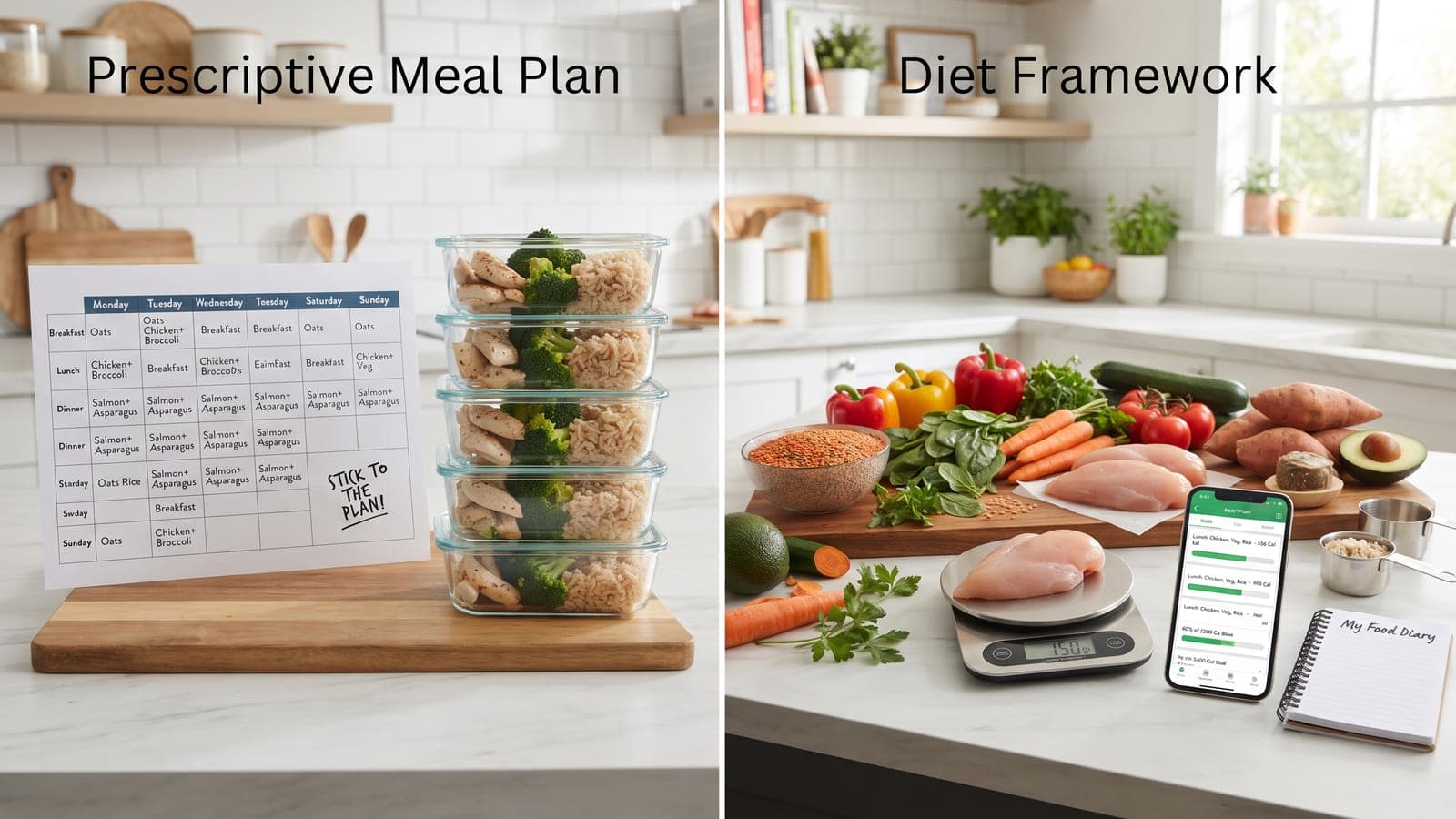
One tells you exactly what to eat at every meal. The other teaches you how to decide. They suit different people, and picking the wrong one is why plans get abandoned in week three.
Why Most Diet Plans Fail in Pakistan (And What Actually Works With Local Food)
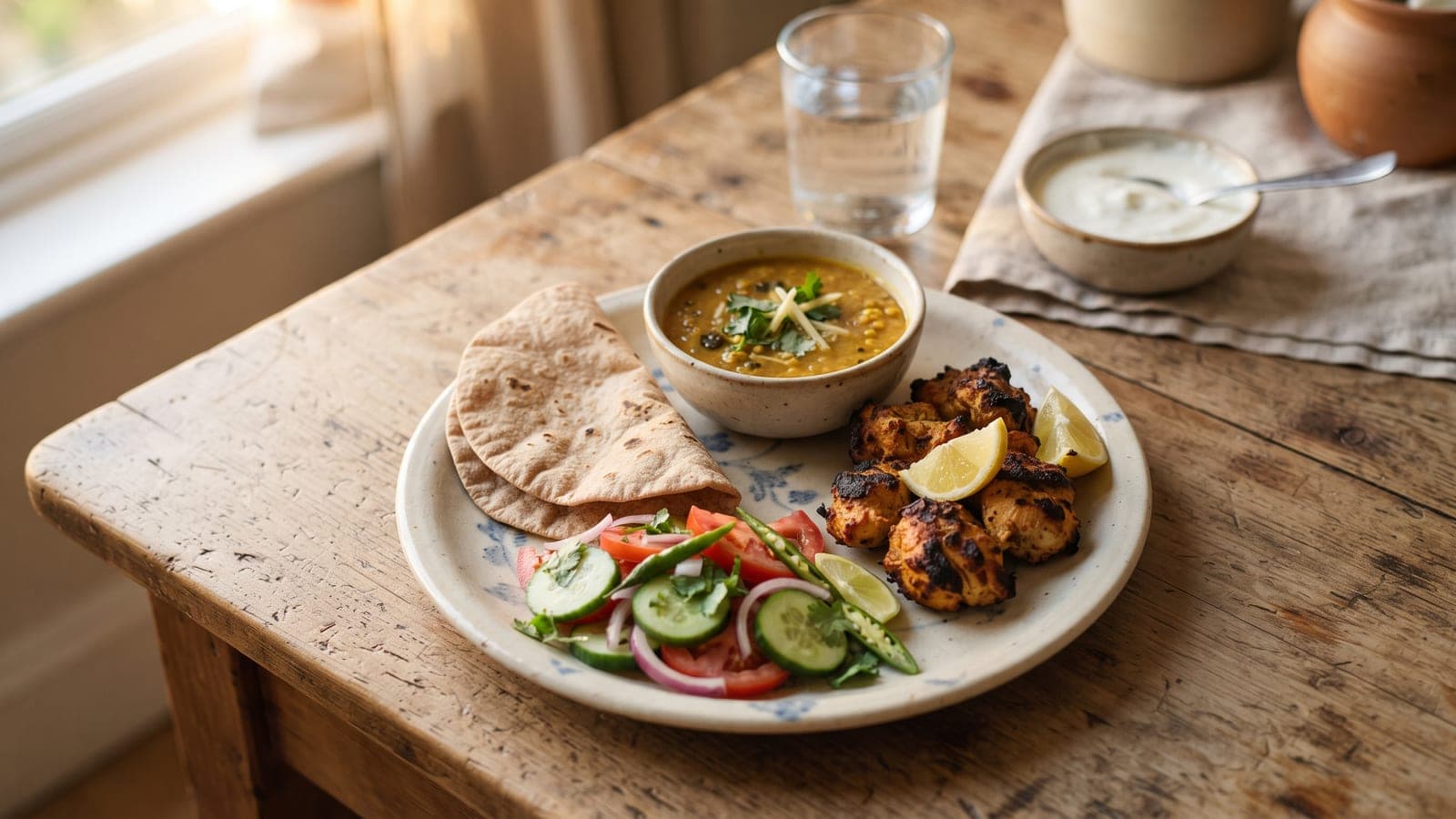
Quinoa, kale, and salmon are not why your diet failed. Most plans collapse because they were built for a kitchen you do not have. Here is what works with roti, daal, and a real grocery budget.

From Software Engineer to Fitness Coach: The System Behind My Coaching Approach
I spent years building software and running a studio before I coached anyone. That background is not a detour from this work — it is the reason my coaching looks the way it does.