
Diet Plan vs Meal Plan: What's the Real Difference?
One tells you exactly what to eat at every meal. The other teaches you how to decide. They suit different people, and picking the wrong one is why plans get abandoned in week three.
Fit with Faisal Noor
Certified Fitness Coach & Nutrition Specialist
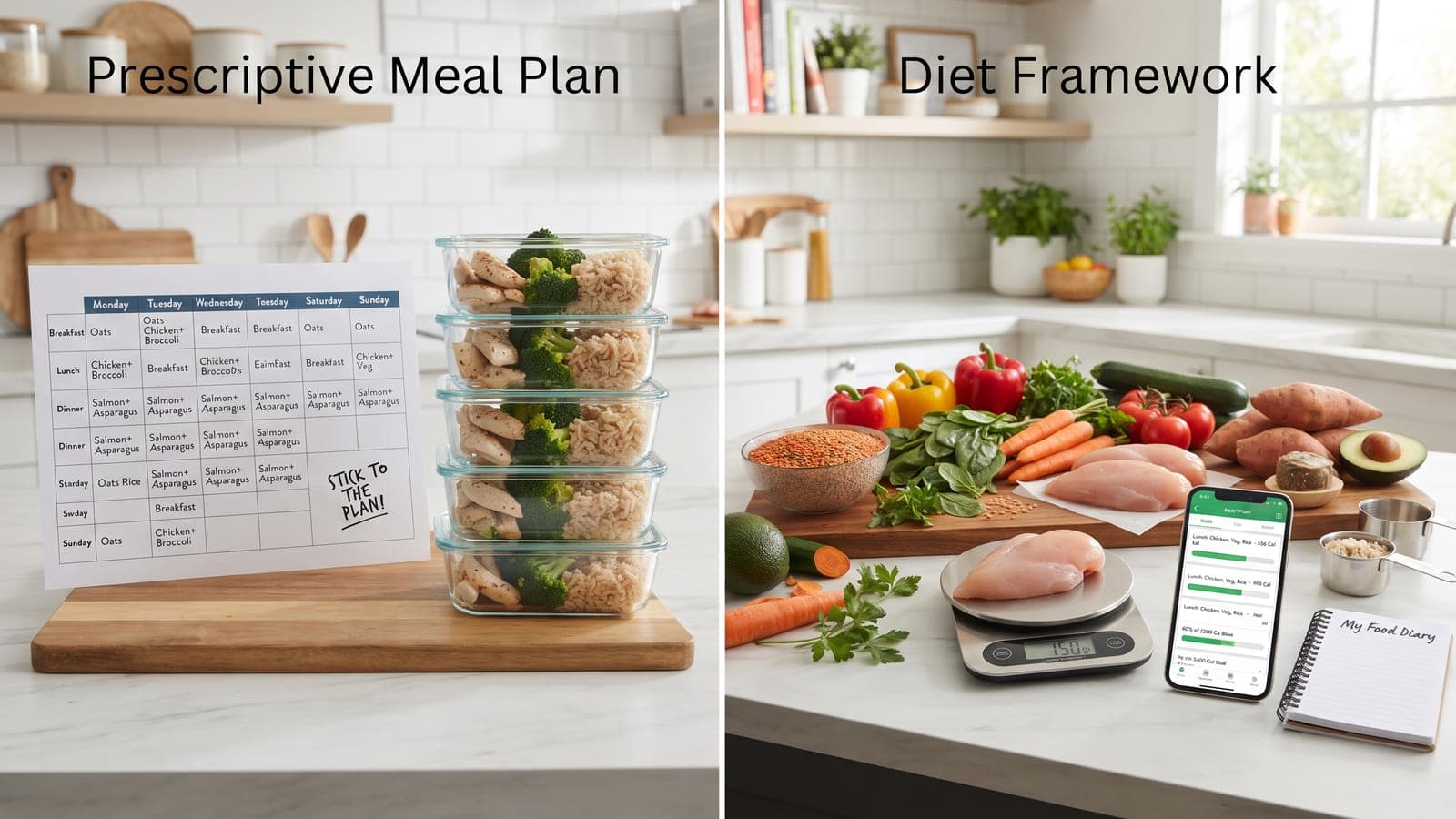
You asked for a diet plan and received a document with targets and food lists. Or you asked and received seven days of specified meals. Both get called the same thing, and they are not the same product.
Knowing which one you were given — and which one you actually need — explains a good deal about why previous attempts stopped.
Why This Happens
A meal plan is prescriptive. Monday breakfast is three eggs and one paratha. Tuesday lunch is 150 g chicken with two roti and salad. Every meal specified, every portion stated.
A diet plan is a framework. Your calorie target, your protein target, portion guidance, food lists, and rules for building meals — but you decide what goes on the plate.
The confusion exists because both are sold as "a diet plan," and clients expecting one are frequently handed the other. Someone who wanted to be told exactly what to eat receives a set of targets and feels unsupported. Someone who wanted flexibility receives a rigid seven-day menu and abandons it the first time they eat out.
Neither product is wrong. They fail when matched to the wrong person.
What Most People Get Wrong
Assuming prescriptive means better. A meal plan looks more thorough — more pages, more detail. It is also more fragile. The moment reality intervenes, a plan with no decision-making built in has no answer.
Thinking a framework means less work was done. The targets in a good diet plan came from calculation and an intake conversation. The document is shorter because the thinking is embedded rather than displayed.
Following a meal plan without learning anything. This is the real cost. Twelve weeks of specified meals can produce excellent results and leave you unable to feed yourself when it ends — which is why weight so often returns after a prescriptive plan finishes.
Getting a framework when you need structure. Some people genuinely do not want decisions. Given targets and told to build meals, they freeze, guess, and drift. For them a meal plan is not a crutch; it is the right tool.
A meal plan gets you through twelve weeks. A diet plan teaches you to eat for the next ten years. Most people need some of both, in that order.
The Fix: Which One You Need
A meal plan suits you if
- You are completely new to tracking and portions
- You find food decisions draining and want fewer of them
- Your week is highly predictable — same schedule, same kitchen
- You have a near-term deadline — a wedding, an event
- Previous attempts failed at the "what do I actually cook" step
A diet plan suits you if
- You eat out or travel regularly
- Your schedule is unpredictable
- You want to understand why, not only what
- You have followed prescriptive plans before and rebounded after
- Your household cooks one meal and you eat what is cooked
The sequence that works best
For most people it is not either/or — it is a progression.
Weeks 1–4: mostly prescriptive. Specified meals while you learn what portions look like and what hitting your protein target feels like. This is a learning phase disguised as a diet.
Weeks 5–12: framework with examples. Targets plus sample meals. You start building your own and checking them against the numbers.
Beyond: framework only. You know what 40 g of protein looks like on a plate. You no longer need the document.
The mistake is skipping the first stage for someone who needs it, or never leaving it — which is how people end up on their fourth meal plan in three years.
What both must contain
Whichever you get, it should include:
- A calorie target derived from your maintenance, not a round number
- A protein target in grams
- Local food you can actually buy
- Rules for exceptions — dawats, travel, eating out
- A revision schedule, because maintenance falls as you get lighter
If a plan lacks the last two, it is a document rather than a plan. The process behind a proper one looks like this.
The question to ask before you buy either
Whatever you are offered, ask one thing: what happens when it stops working?
A plan is an estimate. Your maintenance calories fall as you lose weight, so any target set today will stall in six to eight weeks. That is arithmetic, not failure.
If the answer is "email me and I will revise it," you are buying a plan with support. If the answer is silence, you are buying a document — which may be fine, provided it is priced as one and you understand you will need to adjust it yourself.
This single question separates most of the offers you will encounter.
The Local Version
One factor decides this more often than anything else here: who cooks.
If your household cooks one salan for everyone, a prescriptive meal plan specifying grilled chicken and steamed vegetables is asking you to cook separately twice a day. Very few people sustain that past a month, and the failure gets blamed on discipline.
For most people in that situation, the right answer is a framework built around the family meal — a different plate from the same pot, with portions and one protein addition specified. That is a diet plan, not a meal plan, and it is why imported meal plans fail here so consistently.
Before requesting either, answer one question honestly: do you want to be told what to eat, or taught how to decide? Both are legitimate. Only one will suit you right now.
Keep Reading
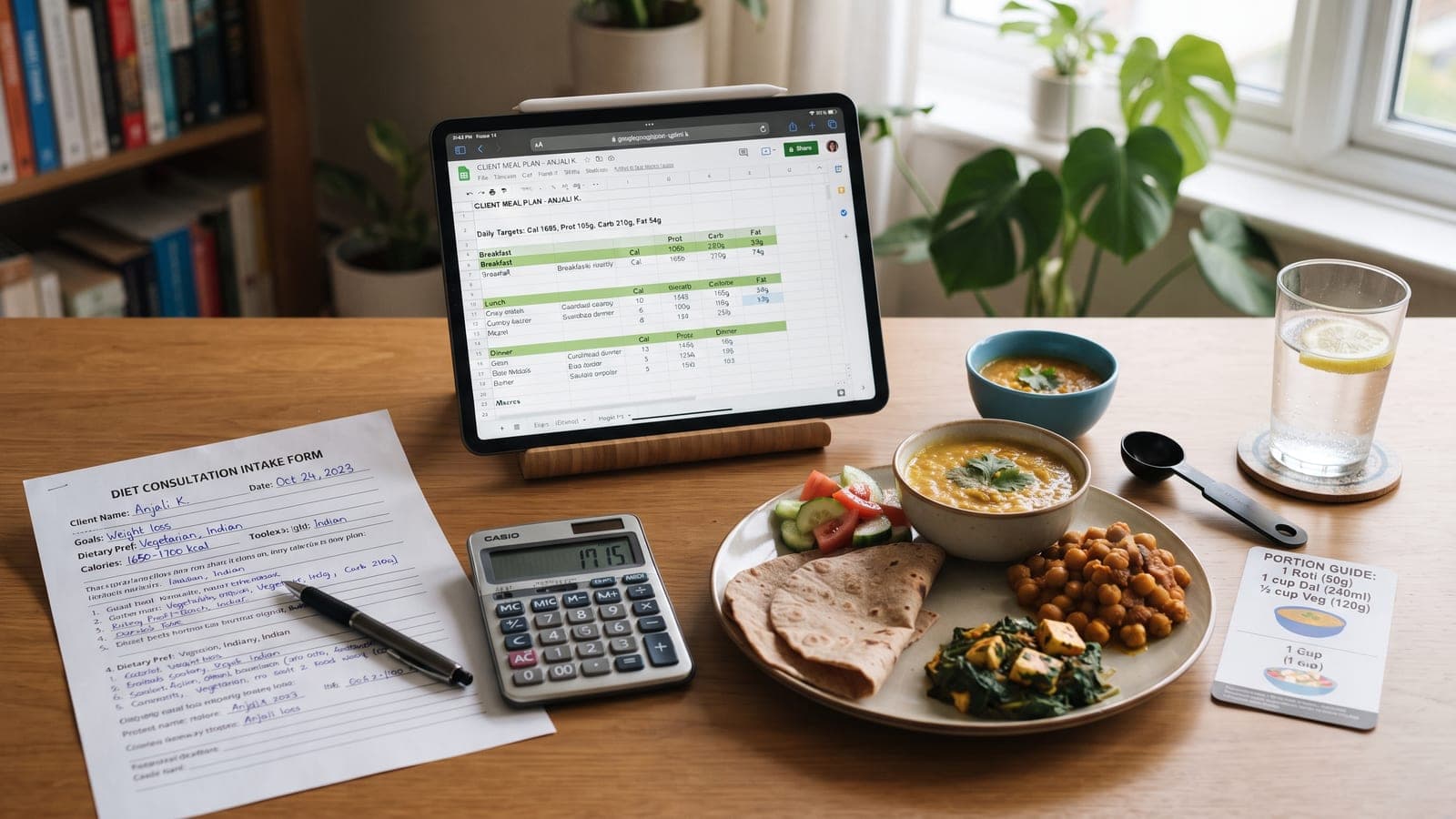
How I Build a Custom Diet Plan for a New Client (Step by Step)
What actually happens between someone signing up and receiving their plan — the questions I ask, the calculations behind the numbers, and why the first version is deliberately not the final one.
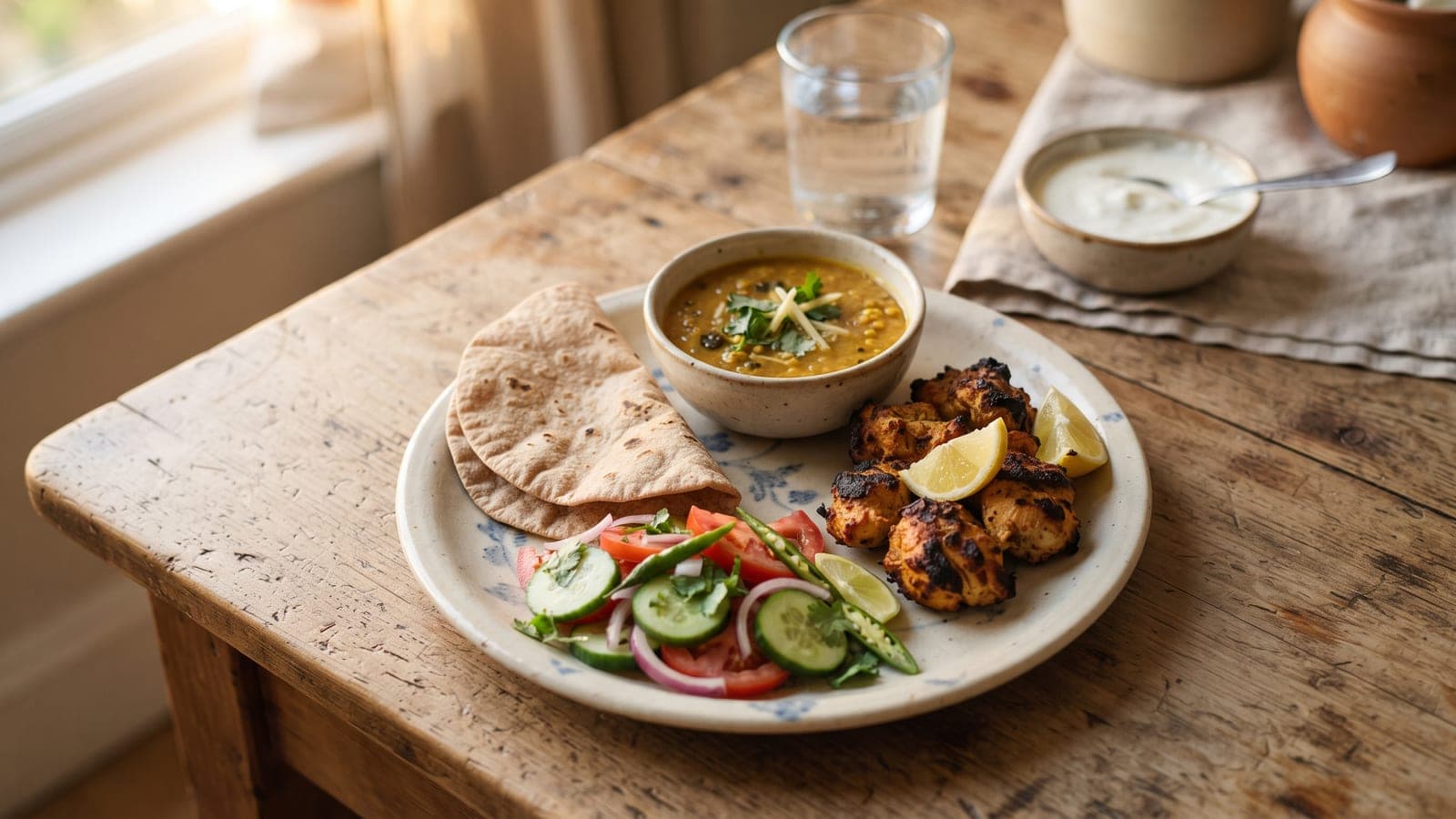
Why Most Diet Plans Fail in Pakistan (And What Actually Works With Local Food)
Quinoa, kale, and salmon are not why your diet failed. Most plans collapse because they were built for a kitchen you do not have. Here is what works with roti, daal, and a real grocery budget.
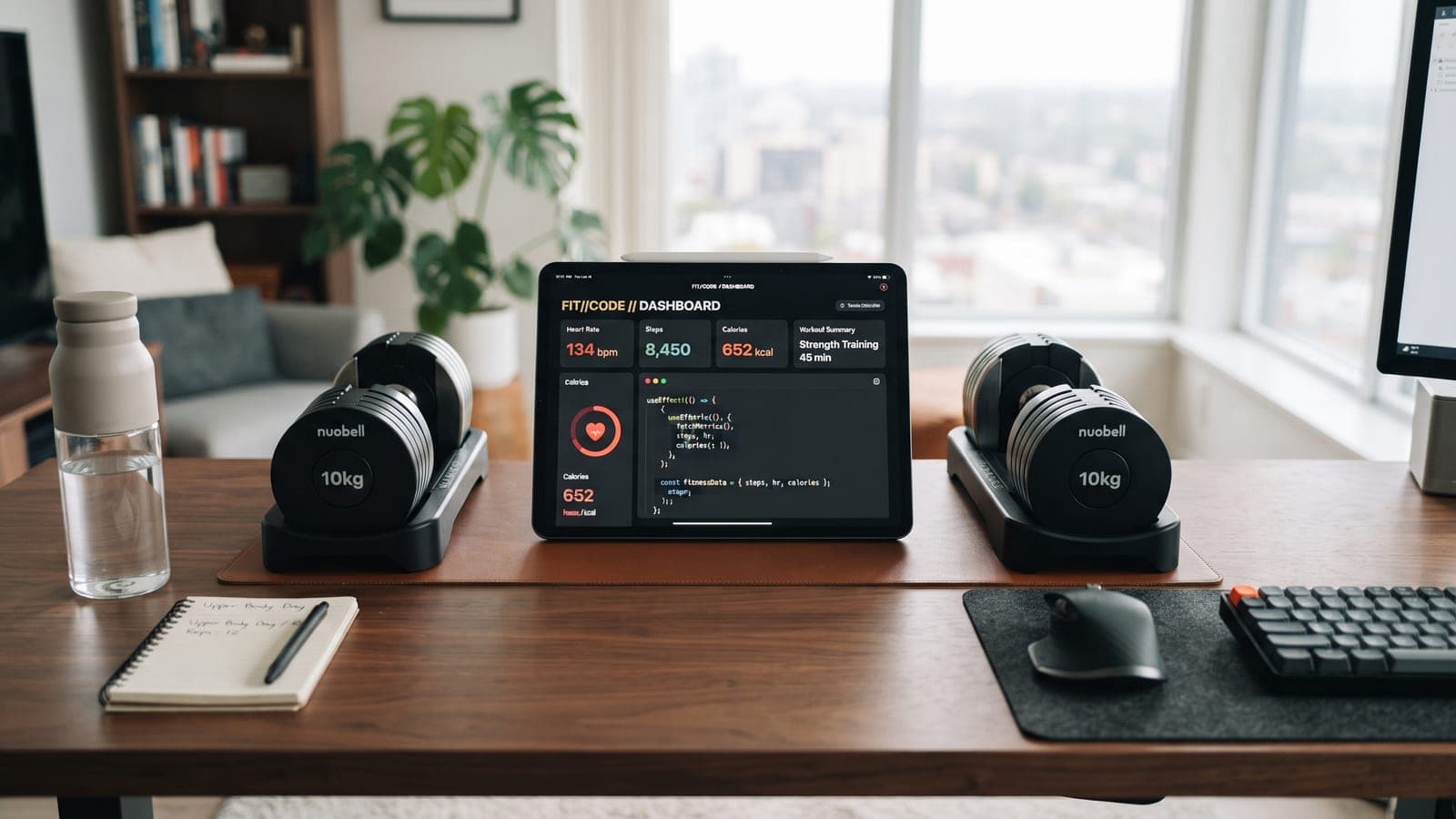
From Software Engineer to Fitness Coach: The System Behind My Coaching Approach
I spent years building software and running a studio before I coached anyone. That background is not a detour from this work — it is the reason my coaching looks the way it does.