
Is Intermittent Fasting Actually Better for Fat Loss, or Just Marketing?
Intermittent fasting works for a lot of people — but not for the reasons it is usually sold on. Here is what the controlled research shows, who it genuinely suits, and who should avoid it.
Fit with Faisal Noor
Certified Fitness Coach & Nutrition Specialist
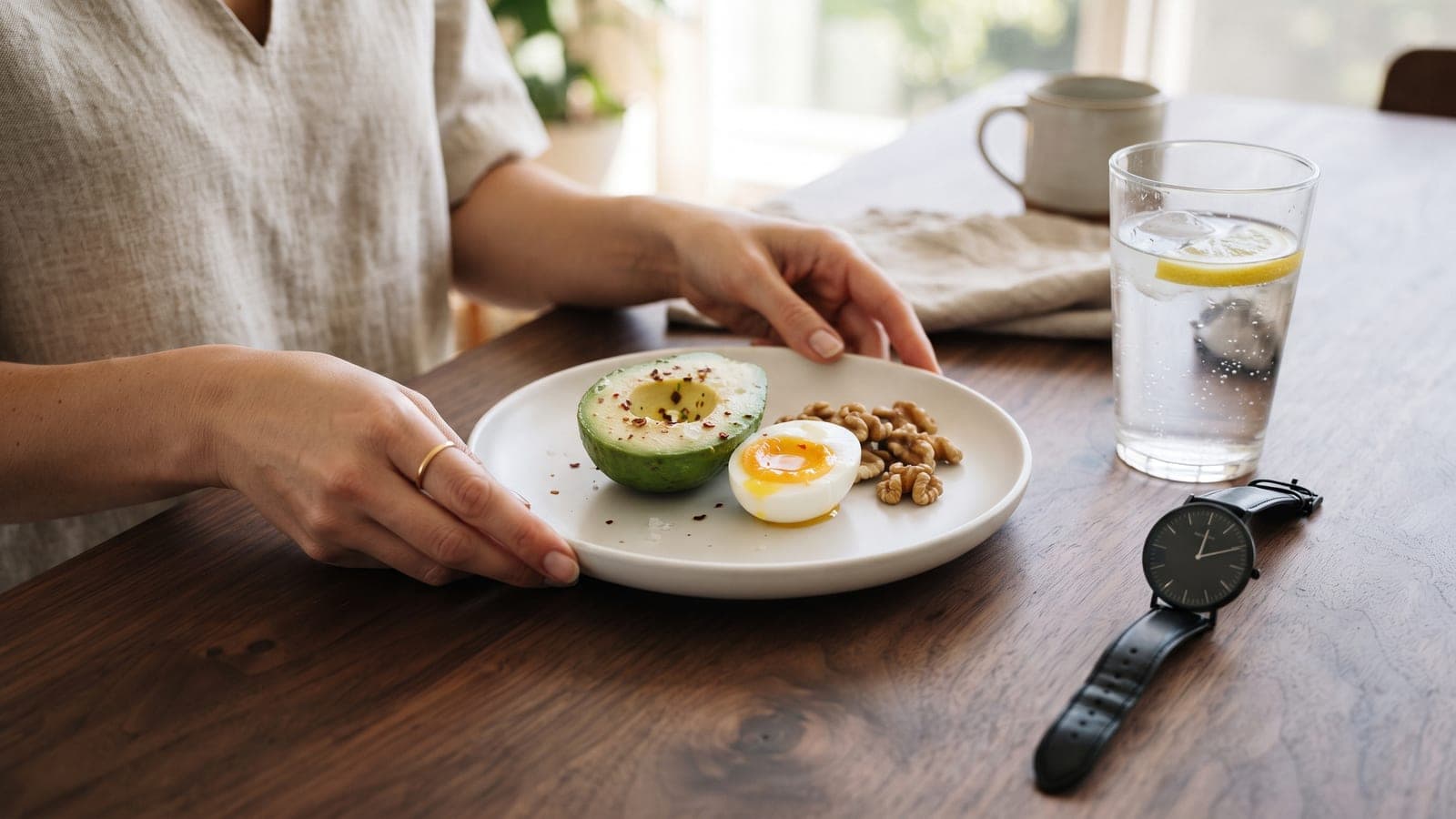
Someone told you they lost twelve kilos on 16:8 and you are wondering whether the eating window is the thing you have been missing.
It might help you. But probably not for any of the reasons it was explained to you, and the distinction matters — because if you adopt it expecting a metabolic advantage, you will be disappointed, and if you adopt it as a scheduling tool, it may work very well.
Why This Happens
Intermittent fasting is a category of eating schedules, not a diet. The common versions:
- 16:8 — eat within an 8-hour window, fast for 16
- 5:2 — eat normally five days, heavily restrict two
- OMAD — one meal a day
What made it popular is a genuinely appealing mechanism story: fasting lowers insulin, which allows fat to be released from storage, which means you burn more fat. Every step of that is true in isolation, and the conclusion still does not follow.
Fat is released from and stored into fat cells continuously throughout the day. What determines whether you net lose fat over weeks is whether more left than entered — which is determined by total energy balance, not by the pattern of insulin fluctuations within a day.
The mechanism is real. Its relevance to your body composition is much smaller than the marketing suggests.
What Most People Get Wrong
Believing it beats other diets calorie-for-calorie. When researchers compare intermittent fasting against continuous calorie restriction with matched calories and protein, fat loss comes out broadly the same. The window is not doing independent work.
Missing why it works when it works. IF is an effective adherence tool. Cutting the eating window from fourteen hours to eight removes breakfast, removes evening snacking, and simply gives you fewer opportunities to eat. Most people eat several hundred fewer calories without counting anything.
That is a real benefit. It is a behavioural one, not a metabolic one — and the difference matters because it tells you when IF will help and when it will not.
Assuming the window overrides the total. If you eat 3,000 calories between noon and 8pm, you will gain weight. The window imposes no ceiling; plenty of people compensate fully within it and cannot understand why nothing changes.
Ignoring the protein problem. Two meals a day makes hitting 140 g of protein considerably harder. Under-eating protein while in a deficit is how you lose muscle alongside fat, which produces the smaller-but-soft outcome nobody wants.
Intermittent fasting is a scheduling tool, not a metabolic one. It helps when eating less often means eating less. It does nothing when it does not.
The Fix: Who It Actually Suits
It probably suits you if
- You are not hungry in the morning. Forcing breakfast because you were told to is the easiest meal to drop.
- Your overeating is concentrated in one window — typically late evening — and a rule closes it.
- You prefer fewer, larger meals. Some people find two 700-calorie meals more satisfying than four 350-calorie ones, and satisfaction drives adherence.
- You want fewer decisions. "I do not eat before 1pm" is one rule replacing many small ones.
It probably does not suit you if
- You train early. Fasted training is fine for general fitness, but hard resistance training on an empty stomach after a 16-hour fast usually means worse sessions.
- You struggle to hit protein. Compressing 140 g into two meals is genuinely difficult.
- You have a history of disordered eating. Rigid rules around when you may eat can be actively harmful. Speak to a doctor first.
- You are diabetic or on medication affecting blood sugar. This needs medical supervision, not a blog. Talk to your doctor.
- Long fasts make you irritable and unproductive. That cost is real and rarely worth paying.
If you try it
- Set the window around your life, not the reverse. If you eat with family at 8pm, run 12–8, not 8–4.
- Keep protein high. Aim for 40–50 g per meal, which usually means deliberately planning it.
- Do not treat the window as permission. Your calorie target still decides the outcome.
- Give it three weeks. The first fortnight is adjustment; judge it after that.
- Drop it without guilt if it does not fit. It carries no advantage you cannot get elsewhere.
What about autophagy and the health claims?
This is the second argument you will hear: that fasting triggers cellular repair processes with benefits beyond fat loss.
Autophagy is real and genuinely interesting. What is not established is the timeline in humans, the threshold at which it becomes meaningful, or whether the popular fasting windows reach it. Most of the striking findings come from animal studies or from fasts considerably longer than sixteen hours.
It may turn out to matter. It is not currently a reason to choose this over another approach, and it is certainly not a reason to persist with a schedule that is making you miserable.
Ramadan Is Not the Same Thing
This comes up constantly, and the comparison misleads people.
Ramadan fasting excludes water, which 16:8 does not, and the eating window falls at times not chosen for training or convenience. Many people also gain weight during Ramadan — fried items at iftar, a heavy sehri, and far less daily movement can easily exceed a normal day's intake.
If you fast during Ramadan and want to avoid that, the levers are the ordinary ones: keep protein high at both meals, moderate the fried food, and keep your step count up. The fasting itself is not the variable.
If you are considering IF for fat loss, do this first: work out your calorie target and track honestly for a week without changing your schedule. If you are already in a deficit and losing steadily, the window will add nothing. If you are consistently overshooting in the evenings, it may be exactly the structure you need.
Keep Reading
Supplements: What's Worth Your Money and What Isn't
Three supplements have solid evidence behind them. Most of the rest are selling you an expensive version of something food already provides. Here is the honest breakdown.
Water Intake and Weight Loss: Fact vs Overhyped Advice
Water does not burn fat, and drinking four litres will not speed anything up. What it does do is worth knowing — particularly the effect it has on the number you see on the scale.
Sustainable Weight Loss: What "1kg a Week" Actually Costs Your Body
Losing a kilo a week is possible. What the promise leaves out is how much of it is muscle, what it does to your training, and why the weight usually comes back. Here is the honest arithmetic.