
How to Know If You Need a Coach or Just a Better Plan
Not everyone needs coaching, and it is worth saying so. Here are the five questions that separate a knowledge problem from an execution problem — and what each one actually costs to fix.
Fit with Faisal Noor
Certified Fitness Coach & Nutrition Specialist

You are stuck, and you are trying to work out whether to pay someone or read more.
There is a genuine answer to this, and it is not always "hire a coach." Plenty of people need one specific question answered and then do fine alone for another year. Others have read for eighteen months and are stuck precisely because reading is not their bottleneck.
Five questions sort this out.
Why This Happens
Two entirely different problems produce the same symptom.
A knowledge problem means you do not know what to do. The plan is wrong, absent, or built on something that does not apply to you. More information genuinely helps.
An execution problem means you know exactly what to do and are not doing it consistently. More information makes this worse — it feels like progress while changing nothing, and it is why people can name six training splits and have followed none of them for eight weeks.
Most people misdiagnose which one they have, and the default assumption is nearly always "I need to learn more." That assumption is comfortable, because reading another article is easier than the four-week stretch of unremarkable consistency that would actually move things.
What Most People Get Wrong
Buying coaching to import discipline. Coaching provides structure and accountability. It does not do the sessions for you, and someone who will not train three times a week alone often will not train three times a week with a plan either. That is worth being honest about before spending money.
Reading indefinitely instead of starting. The information required to lose fat and get stronger is not extensive and is freely available. If you have read for a year and not run one plan for eight uninterrupted weeks, you do not have a knowledge gap.
Buying a full programme for a single question. Sometimes one thing is wrong — a target, a stalled lift, a misunderstanding about protein. That is a thirty-minute conversation, not a three-month commitment.
Assuming cost tracks value. The most expensive option is not automatically the right one. The right one is whichever addresses the constraint you actually have.
More information is the answer to a knowledge problem. It is an expensive form of procrastination for an execution problem.
The Fix: Five Questions
1. Have you followed one plan, unchanged, for eight weeks?
If no — you do not need a coach yet. Pick any reasonable plan and run it for eight weeks without modification. Most people discover their problem was never the plan.
If yes and it did not work — that is real information, and worth an outside opinion.
2. Can you state your calorie and protein targets right now?
If no — this is a knowledge gap with a free fix. Work out your numbers and track for a fortnight.
If yes and you hit them consistently with no result, something specific is wrong and is worth diagnosing properly.
3. Do you have a training log with weights and reps from last week?
If no — start there before paying anyone. Progressive overload requires a record, and its absence explains most stalled training.
If yes and the numbers have not moved in two months — that is a programming question, and one worth asking someone.
4. Is your problem knowing what to do, or doing it?
Answer honestly.
Knowing → a plan, a course, or one consultation solves it. Doing → you need accountability, which is what ongoing coaching provides. A better PDF will not.
5. Have you ruled out the boring explanations?
Sleep under six hours, a step count that has collapsed, a deficit that stopped being a deficit as you got lighter. These account for most stalls, and none needs a coach to fix.
If you have not checked these, check them first. It costs nothing and resolves it more often than not.
A note on which is more common
In my experience the split is roughly one to three. For every person with a genuine knowledge gap, there are about three who know enough and have not run it consistently.
That is not a criticism. Consistency is harder than learning, and it is far less interesting. But it does mean that if you are unsure which camp you are in, the odds favour execution — and the test is free: eight weeks, one plan, no changes.
What Each Option Actually Costs You
| Your situation | What you need |
|---|---|
| No plan, starting out | A structured plan or course |
| One specific question | A single 15-minute session |
| Plan followed, no result | A 30-minute review to find the fault |
| Know what to do, not doing it | Ongoing coaching for accountability |
| Stuck on one lift | A form check |
| Have not tried consistency yet | Eight weeks of unchanged effort — free |
That last row is not a joke, and it is the honest answer for a substantial share of people who ask.
If You Are Still Unsure
The cheapest way to resolve this is a single short session rather than a commitment. Fifteen minutes is usually enough to establish whether your problem is the plan, the execution, or one specific variable — and that answer tells you what to buy next, including nothing at all.
I would rather tell someone they need eight consistent weeks than sell them a three-month plan they do not need. It is better for them, and the people who do work with me afterwards start from a position where coaching actually adds something.
Before anything else: run through the five questions above and write down your answers. Most people find the bottleneck identifies itself by question three.
Keep Reading

From Software Engineer to Fitness Coach: The System Behind My Coaching Approach
I spent years building software and running a studio before I coached anyone. That background is not a detour from this work — it is the reason my coaching looks the way it does.
How to Set a Weight Loss Goal You'll Actually Hit
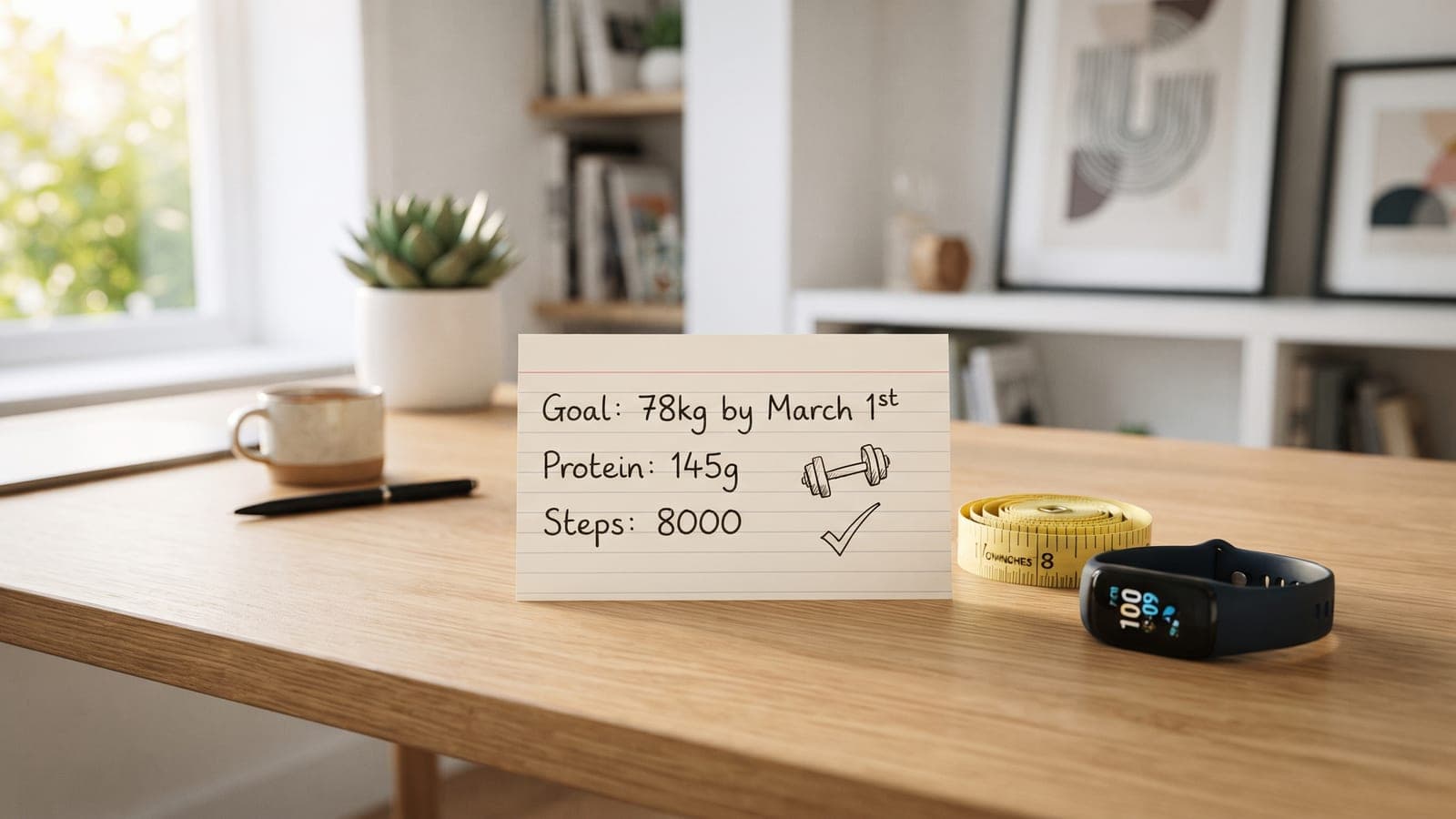
"I want to lose weight" is not a goal — it has no number, no deadline, and no way to tell whether you are on track. Here is how to set one properly, and why the number you pick matters less than the date.

Why Most People Quit Their Diet by Week 3 (And How to Not Be One of Them)
Week three is when motivation has gone, results are not yet visible, and the plan starts feeling like a punishment. Here is why that specific week breaks people, and how to build one that survives it.