
Why Most People Quit Their Diet by Week 3 (And How to Not Be One of Them)
Week three is when motivation has gone, results are not yet visible, and the plan starts feeling like a punishment. Here is why that specific week breaks people, and how to build one that survives it.
Fit with Faisal Noor
Certified Fitness Coach & Nutrition Specialist

Week one is easy. Week two is fine. Somewhere in week three, the whole thing quietly stops.
This is such a consistent pattern that it is worth treating as a design problem rather than a personal failing. Week three breaks people for identifiable reasons, and a plan can be built to survive it.
Why This Happens
Three things converge at almost exactly the same point.
Motivation has run out. The energy that started the plan is a finite resource, and it depletes over roughly a fortnight. Anything relying on enthusiasm rather than structure fails once it is gone.
Results have stalled visually. Weeks one and two produce a dramatic scale drop, most of it water and glycogen. By week three that is finished and you are into genuine fat loss, which shows at 0.4 kg a week — real, but invisible in the mirror. You are progressing exactly on schedule and it feels like nothing is happening.
The novelty has gone. The new food was interesting for ten days. Now it is just what you eat, and you have started noticing what you gave up.
Add a bad night's sleep or a stressful week and the plan does not get consciously abandoned. It gets skipped once, then twice, then it is over.
What Most People Get Wrong
Treating week three as evidence the plan failed. It is evidence the water weight finished. Those are completely different things, and confusing them ends working plans.
Relying on motivation as the mechanism. Motivation gets you started. Structure is what keeps you going, and structure means the plan is easy enough to follow on a bad day.
Starting too aggressively. An 1,100-calorie deficit is survivable for two weeks on enthusiasm alone. When enthusiasm goes in week three, what remains is hunger and no willpower to meet it. The aggressive start is what causes the week-three collapse.
Changing everything at once. New diet, new training, no sugar, 5am starts. Nine simultaneous changes means nine chances to fail, and failing at one usually takes the rest with it.
Treating one bad meal as the end. The damage from a single meal is trivial. The damage from deciding the week is ruined is not.
Week three is not where plans fail. It is where plans that were too aggressive in week one finally run out of the motivation that was hiding the problem.
The Fix
1. Start smaller than you want to
A 400-calorie deficit rather than 800. Three training sessions rather than six.
This feels insufficient in week one, which is precisely the point — you are building something that still works in week eight, when the enthusiasm is gone. Pick a rate you can defend.
2. Change one thing at a time
Month one: hit your protein target. Nothing else. Month two: add training. Month three: address steps or sleep.
Slower, and dramatically more likely to still be running at month six.
3. Design for your worst week, not your best
Build the plan around a week with travel, a deadline, and a sick child — not around a free Sunday when you cook everything from scratch. If it survives the bad week, it survives everything.
4. Know what week three looks like before you reach it
Simply expecting it removes most of its force. Weeks one and two: fast scale movement, mostly water. Week three onwards: 0.3–0.5 kg a week, which is what actual fat loss looks like.
Write that down at the start. When week three arrives and the scale slows, you will recognise it as the plan working rather than the plan failing.
5. Have a rule for bad days, decided in advance
Return at the very next meal. Not tomorrow, not Monday.
Decide this now, while you are calm, because you will not decide it well at 10pm having eaten more than you intended. This single rule converts a failure into a rounding error, and it is the highest-value habit on this page.
6. Measure something other than the scale
Waist measurement fortnightly. Photos monthly. Your training log weekly.
In week three the scale is the least informative number you have. A training log showing your squat has gone from 40 kg to 50 kg is unambiguous evidence of progress at the exact moment you need some.
7. Do not remove food you love permanently
A plan requiring you never to eat biryani again will not last a year. Build it in — one meal a week, portioned, planned. The plan that allows for real life is the one still running in month six.
The Local Version
There is a predictable week-three trap here: a dawat, a wedding, or a family gathering lands almost exactly when your resolve is lowest.
Plan for it before it arrives. Keep protein high at the meals you control that day, keep your steps up, eat normally at the event, and return to the plan at the next meal. That is a complete strategy, and it takes the event from a plan-ending disaster to an ordinary Tuesday.
What week four onwards feels like
Worth knowing, because the difficulty curve is not what people expect.
Weeks four to six are usually the easiest stretch of a properly-designed plan. The habits have set, portions no longer require deliberation, and the visible changes start arriving — which supplies a kind of motivation that no amount of week-one enthusiasm can match.
The next difficult point comes around week ten to twelve, when the novelty is long gone and there is still distance to cover. The answer there is different: that is when a planned maintenance break earns its place.
Knowing both points exist, and roughly when, removes most of their power.
Before you start anything, write down the number you expect to see in week three. Most people who quit did so because nobody told them 0.4 kg a week was the target — and they were hitting it.
Keep Reading

Why "Eat Less, Move More" Advice Fails Most People (An Engineer's Take on Systems That Actually Work)
The advice is technically correct and practically useless. Here is why, borrowed from how software gets built: the problem is never the goal, it is that nobody designed the system that delivers it.
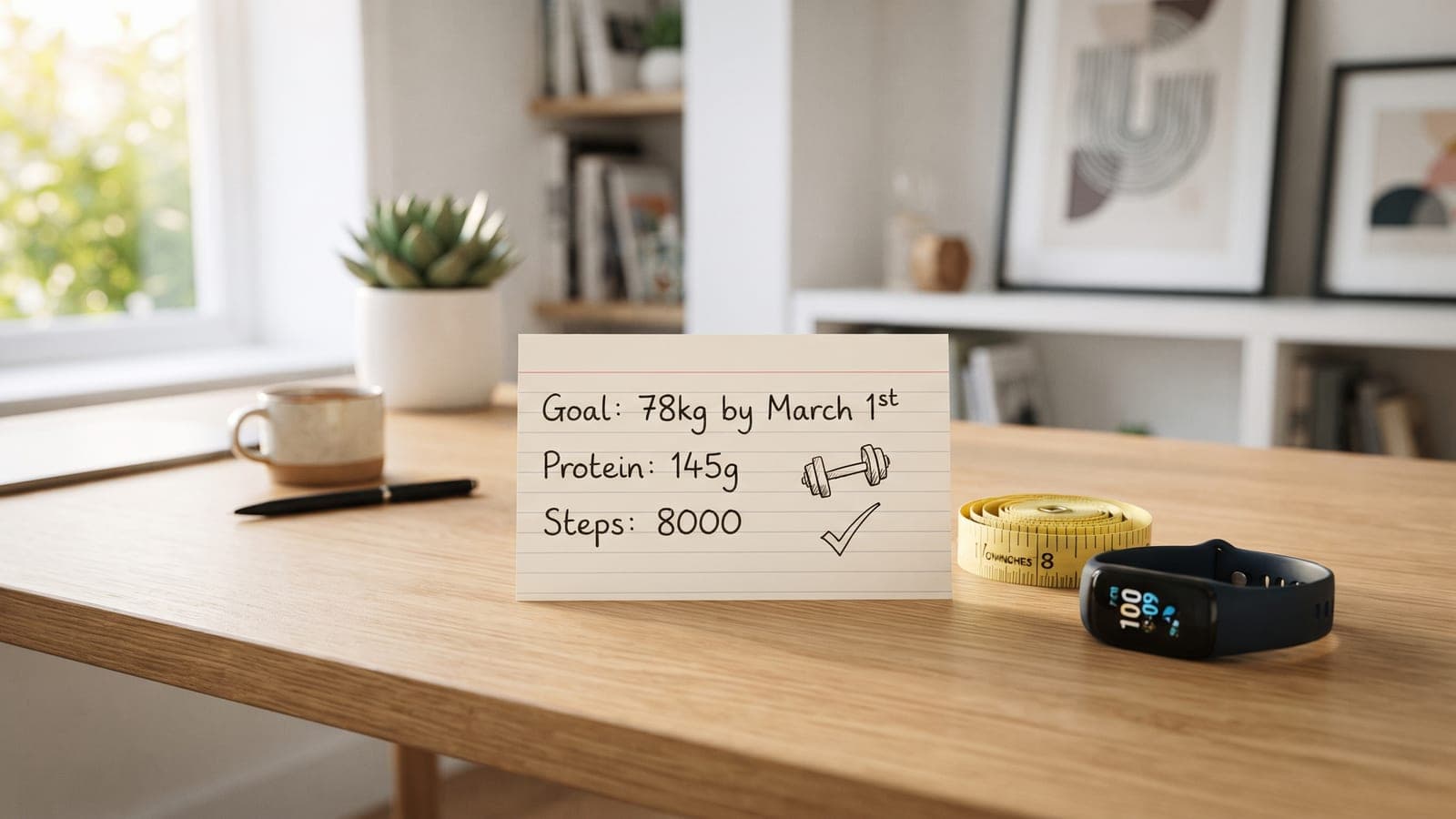
How to Set a Weight Loss Goal You'll Actually Hit
"I want to lose weight" is not a goal — it has no number, no deadline, and no way to tell whether you are on track. Here is how to set one properly, and why the number you pick matters less than the date.

Why Your Step Count Might Matter More Than Your Workout
An hour in the gym burns less than most people think. The walking you do the rest of the day often burns more — and it is the first thing to disappear when a diet starts.