
Home Workout vs Gym: Which One Actually Gets You Results Faster?
The honest answer is that the room matters far less than what happens inside it. Here is where home training genuinely competes with a gym, where it hits a real ceiling, and how to decide which one suits you.
Fit with Faisal Noor
Certified Fitness Coach & Nutrition Specialist
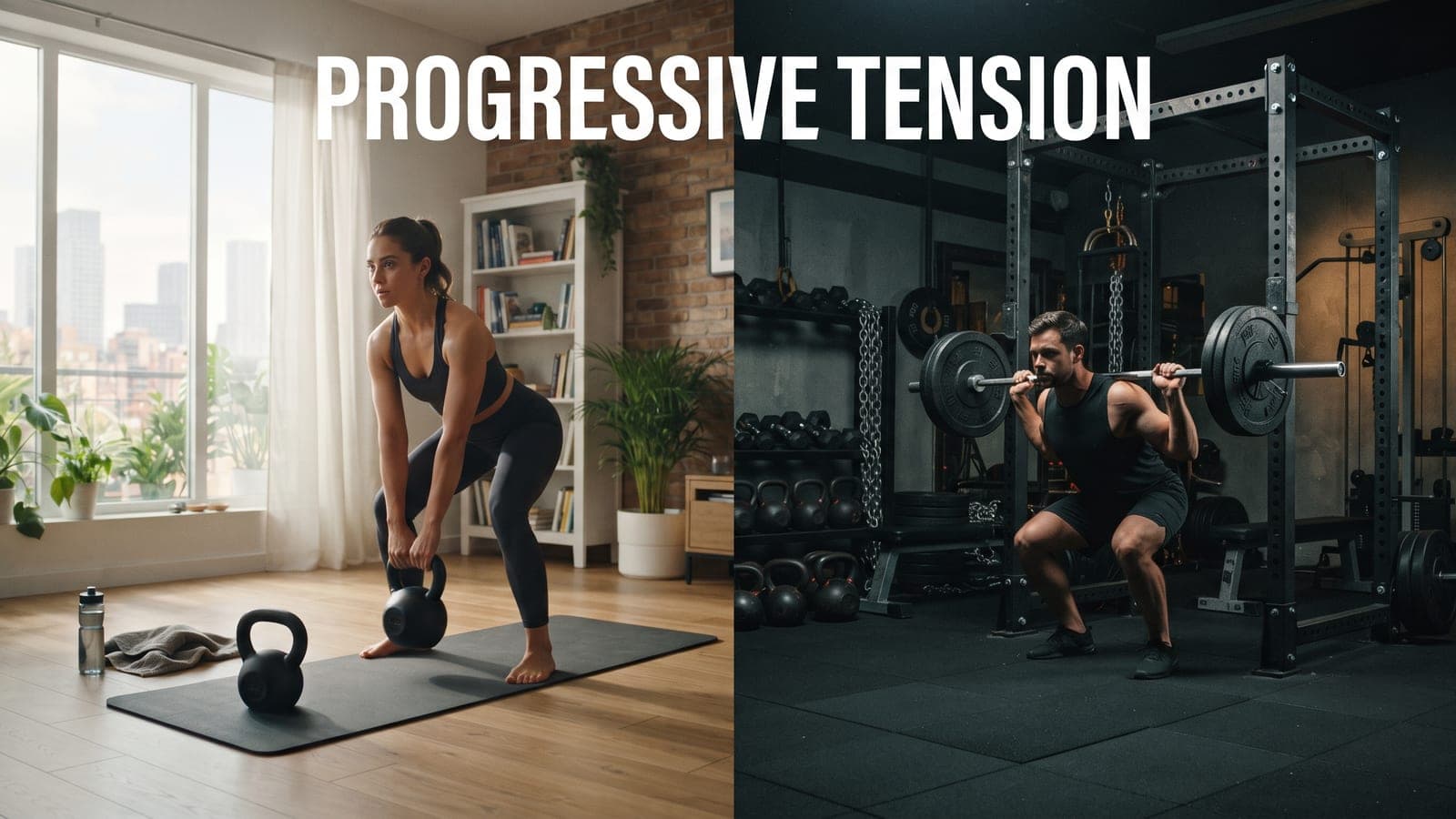
You have been putting off starting because you have not decided where. A gym membership is a monthly cost and a commute. Home is free and immediate, but you suspect it is not "real" training.
So you have spent three weeks deciding instead of three weeks training. That is the actual cost of this question, and it is higher than picking the wrong option would have been.
Here is the honest comparison.
Why This Happens
The question feels important because both sides are argued badly.
Gym marketing implies that results live in the equipment — that without a cable machine and a leg press you are playing at it. Home-workout content overcorrects, insisting a bodyweight circuit in your bedroom is equivalent to a loaded barbell. Neither is true, and the gap between them is where beginners get stuck.
What actually drives results is narrower than either camp admits. Muscle grows in response to progressive tension — a demand that increases over time. Your muscle fibres have no way of knowing whether the tension came from a machine, a dumbbell, or your own bodyweight in a harder position. They register load, effort, and frequency.
So the real question is not "which room is better." It is which setting lets you apply progressive tension consistently, for months. For some people that is a gym. For plenty of others it is a corner of a bedroom, and the honest answer depends more on your commute and your schedule than on the equipment list.
What Most People Get Wrong
Assuming bodyweight training cannot progress. It can, and the levers are well established: change the leverage, slow the tempo, reduce the base of support, increase range of motion. A person doing slow, deep single-leg squats is training their legs harder than someone doing fast bodyweight squats on a gym floor.
Assuming a gym membership creates consistency. It does the opposite for a lot of people. If the gym is thirty minutes away, a session costs you ninety minutes, not forty-five. That gap is where "I'll go tomorrow" comes from. The best programme is one you can actually execute on a bad week.
Buying equipment before establishing the habit. A home gym bought in week one is a common and expensive way to discover you do not train. Start with what you have; buy the pull-up bar in month three when you have proven you will use it.
Ignoring the ceiling entirely. This is the mistake in the other direction. Home training does have limits, and pretending otherwise sets people up to plateau and blame themselves.
The equipment does not build the muscle. Progressive tension does. Everything else is logistics — and logistics decide whether you train in March, which is what actually matters.
The Fix: An Honest Comparison
Where home training genuinely competes
Pushing. Press-ups progress a long way — incline, standard, feet-elevated, archer, one-arm. Most people never exhaust that ladder.
Legs, up to a point. Split squats, Bulgarian split squats, single-leg hinges, and step-ups load one leg with most of your bodyweight. For a beginner and most intermediates, this is sufficient stimulus.
Core and bracing. Planks, hollow holds, and carries need nothing.
Consistency. Zero commute, no waiting for equipment, no closing time. For a parent, a shift worker, or anyone with an unpredictable schedule, this advantage is decisive and it compounds over months.
Where home training hits a real ceiling
Heavy pulling. This is the honest gap. Rows off a table work up to a point, but a strong back eventually needs loaded pulling. A doorway pull-up bar closes most of it for less than one month of most memberships.
Heavy leg loading. Split squats carry you further than people expect, but there is a ceiling, and a loaded barbell squat sits above it. This matters if your goal is maximal strength. It matters far less if your goal is to lose fat and look better.
Absolute strength ceilings. If you want a 140 kg squat, you need a barbell. That is a real goal, and it needs a gym.
A decision you can make in one minute
| Your situation | Train |
|---|---|
| Beginner, first 6 months | Either — pick the one with less friction |
| Commute over 20 minutes | Home |
| Goal is fat loss and general strength | Either |
| Goal is maximal strength or a specific lift | Gym |
| Schedule is unpredictable | Home |
| You struggle to start without structure | Gym |
| Budget is tight | Home, plus a pull-up bar later |
The combination most people should actually run
Train at home three days a week, and treat a gym as an upgrade you add when a limit becomes real — not before. A great many people never need the upgrade, because their goal was never a 140 kg squat.
If you are starting from zero, the first four weeks are the same either way — same five movements, same progression, different room.
The Local Version of This Question
Two factors weigh more heavily here than in the content you read from abroad.
Gym access varies enormously by city and by area, and for many women in particular a suitable gym may not be a realistic option at all. Home training is not the compromise choice in that situation; it is the whole game, and it works.
Load-shedding also makes a difference nobody writes about. Sessions that depend on treadmills or machines lose to sessions that need only floor space and a dumbbell. Bodyweight and free-weight training does not care whether the power is on.
Pick one today — the one with fewer excuses attached — and do the first session tonight. Three weeks of training in an imperfect setting beats three more weeks of deciding.
Keep Reading

Rest Days: Why Skipping Them Is Slowing Your Progress
Training is the stimulus. Recovery is where the adaptation actually happens. If you train seven days a week and wonder why nothing is improving, this is usually the reason.
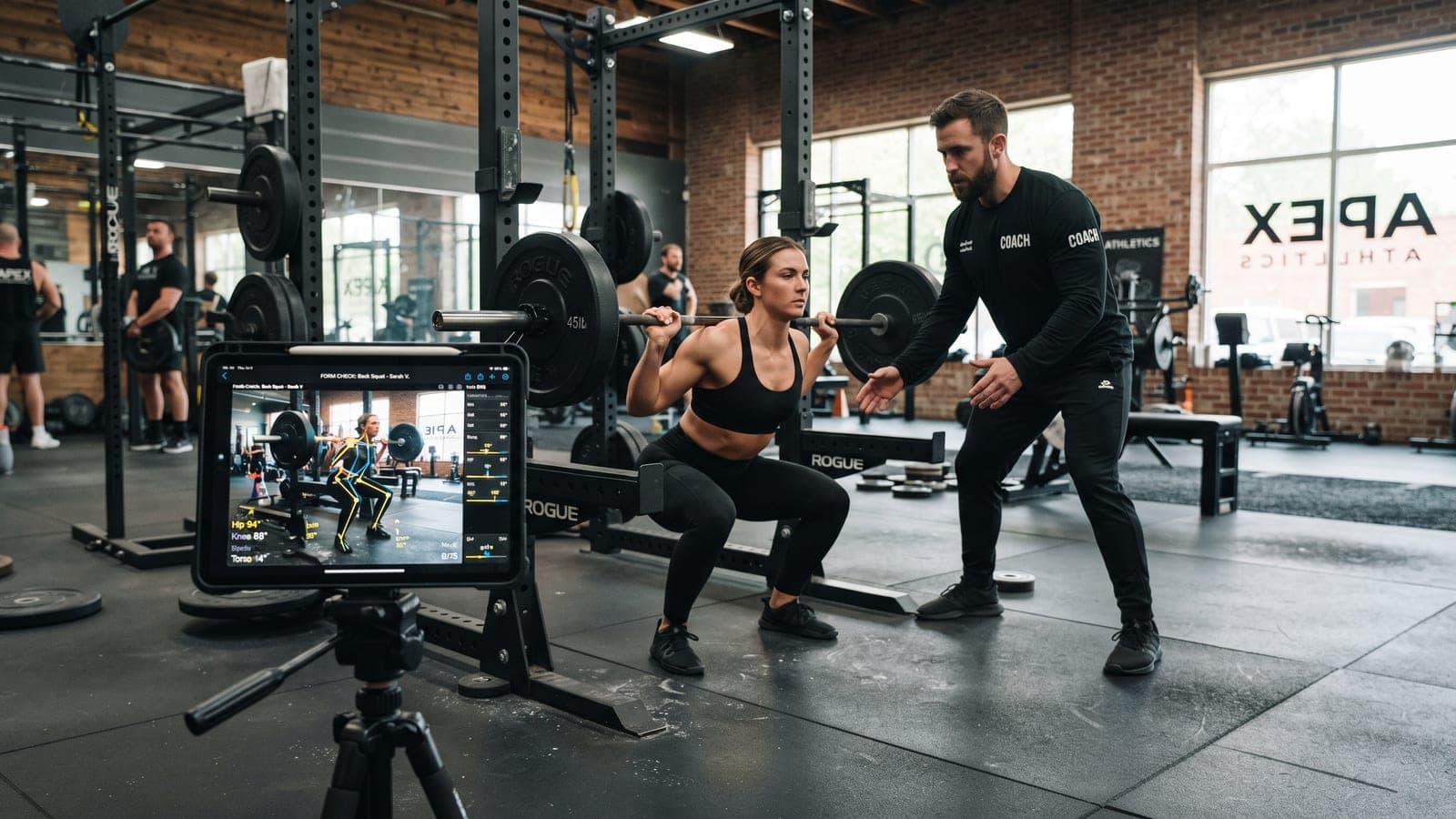
How to Fix Bad Squat Form: A Coach's Checklist
Knees caving, heels lifting, depth cut short, back rounding. Here is what each fault is actually caused by — because the fix is almost never at the place where the problem shows up.

The 5 Exercises Everyone Should Master Before Anything Fancy
Before cable crossovers and Bulgarian drop sets, there are five movement patterns that cover the entire body. Master them and most of the gym becomes optional.